Your business requires regular cleaning scheduled according to risk factors, operational volume, allergen concerns, and health inspections, plus documented records demonstrating HACCP compliance, regulatory audits, and government health requirements. The following sections detail critical cleaning system elements.
Main Points
- Sanitation experts from Brampton work with restaurants, grocery departments, commissaries, warehouses, bakeries, schools, mobile vendors, and allergen-sensitive operations.
- Cross-contamination reduction is ensured by treating frequently contacted areas, food-contact equipment, kitchens, floors, drains, restrooms, and storage areas with compartmentalized approaches.
- Trained providers confirm approved sanitizer dilution, appropriateness, and exposure duration, then record finishing with tests, inspections, and corrective-action records.
- Risk, throughput, format changes, releases, and standards must inform maintenance plans, with routine, recurring, and cyclical duties designated by location.
- Focus on providers displaying hazard analysis knowledge, public-health knowledge, safety training training, liability, testimonials, color-categorized tools, and inspection-ready maintenance records.
What Brampton Operations Require Food Safety Cleaning?
Food safety cleaning is necessary for any Brampton facility that deals with, keeps, prepares, packages, or provides food. Apply it to your facility if it is subject to health oversight, food standards, or HACCP systems. This includes eateries, cafes, warehouses, supermarket areas, meat markets, fish stands, convenience outlets, and institutional food areas.
You also need compliant food safety cleaning in distribution centers, food processing plants, freezer facilities, commercial bakeries, educational nutrition programs, event spaces, and catering hubs. Temporary and mobile establishments count too, including catering trucks, festival vendors, and pop-up food booths. If your staff process ingredients, portion ready-to-eat items, reheat products, or store allergens, your facility needs recorded sanitation procedures. In Brampton, sanitation isn't voluntary; it's part of statutory, business, and public health compliance.
What Do Brampton Cleaning Experts Clean?
Your operation needs cleaning professionals who disinfect frequently contacted surfaces, cooking and food prep areas, all floor types, and toilet facilities to maintain food safety compliance and public health standards. These specific areas are emphasized due to their elevated cross-contamination potential, hazardous walking conditions, and breaches of sanitation codes.
When you understand what they clean, you can verify that your facility's cleaning scope meets operational and regulatory requirements.
Cleaning High-Touch Areas
assign how often each surface is disinfected
rotating cleaning materials regularly, following one-way systems, and separating cleaning supplies according to area. This approach keeps your disinfection program verifiable, justified, and compliance-ready continuously.
Kitchen Areas, Floor Surfaces, and Bathroom Spaces
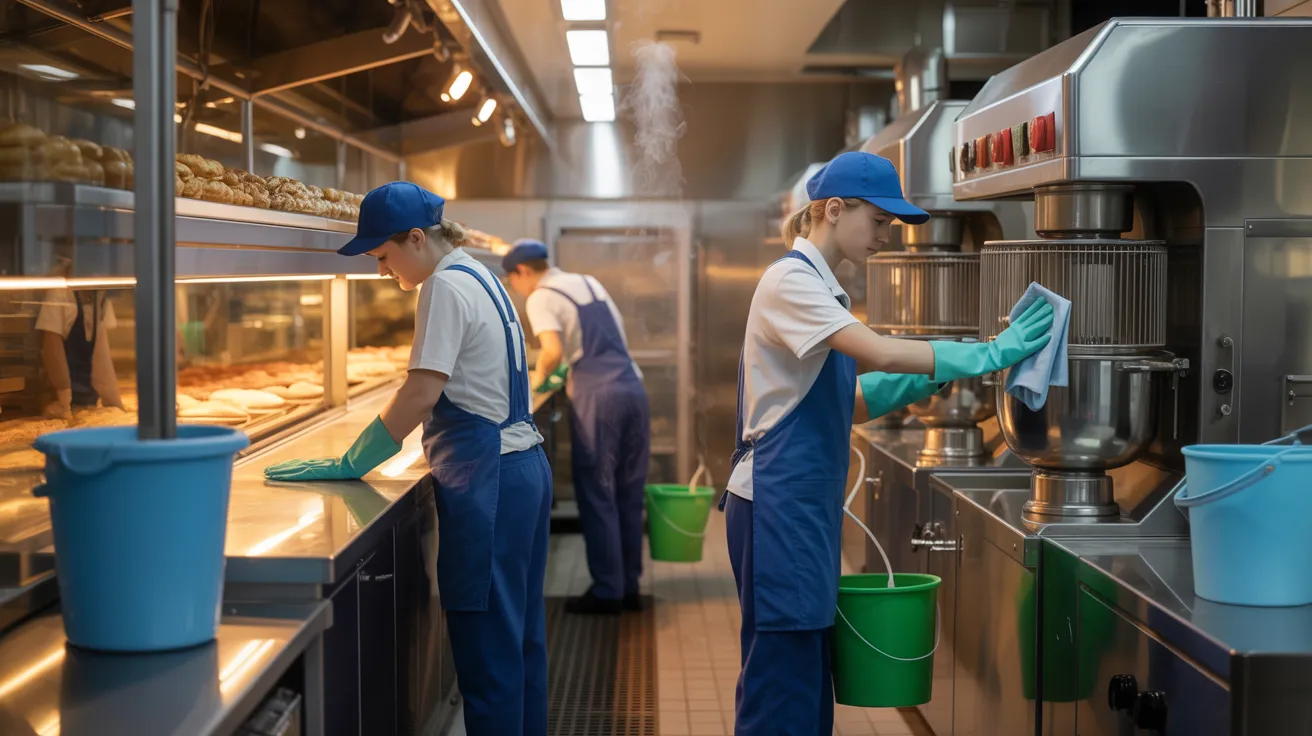
Expect Brampton cleaning experts to target kitchens, floors, and restrooms because each area carries unique foodborne illness prevention, accident prevention, and sanitation risks. In industrial kitchens, you need degreasing on cook lines, equipment exteriors, drains, prep surfaces, and splash zones to reduce contamination and pest pressure.
Professional floor upkeep with documentation is also included. is also provided as part of the service.
In restrooms, cleaners treat contact surfaces, bathroom hardware, partition walls, accessory dispensers, and receptacles then restock supplies and control odours. They also maintain restaurant cleaning supply rooms where product storage, sink cleanliness, and drain systems impact daily sanitation standards and worker protection.
The Importance of Food Safety Cleaning in Brampton
Brampton operations require proper hygiene standards to meet health code requirements and pass inspections. You also minimize cross-contamination by cleaning and sanitizing food-contact surfaces, equipment, and high-touch areas correctly. Most importantly, you safeguard public health by lowering the risk of foodborne illness in your facility.
Sanitary Standards Adherence
Brampton food companies must comply with rigorous sanitary regulations, so cleaning procedures is critical to adhering to health codes, safeguarding customers, and avoiding penalties. You must maintain sanitary food-contact surfaces, documented cleaning schedules, proper chemical use, and verifiable staff procedures that meet municipal and provincial inspection expectations.
Should your cleaning standards weaken, you expose yourself to citations, remedial directives, loss of reputation, and operational suspension during subsequent audits or compliance actions.
Cross-Contamination Prevention
Following regulatory requirements depends on your skill in stopping cross-contamination in daily food handling and cleaning. You must separate raw ingredients from ready-to-eat foods, disinfect work areas after use, and maintain separation of cleaning products from food. Clear procedures reduce transfer risks and support consistent compliance during inspections.
You should implement allergen segregation to prevent major allergens jump in from touching shared surfaces, containers, or equipment. Use dedicated cutting boards, color-coded tools, and careful equipment identification so employees avoid combining products throughout cooking or serving. Require handwashing after handling raw meat, seafood, eggs, or allergen-containing products. Change cleaning rags frequently, and check disinfectant potency using test kits. When you train staff to follow these controls every shift, you build a more hygienic, secure workplace that satisfies Brampton's safety standards consistently.
Public Health Protection
Should food safety cleaning collapse, you don't simply encounter inspection problems—you increase the potential of contamination-related sickness harming customers, staff, and the wider Brampton population. You also weaken your role in protecting public health, especially in busy food facilities where pathogens travel quickly through surfaces, equipment, and touchpoints.
You need sanitation procedures that remove soils, sanitize correctly, and confirm effectiveness. That means following exposure periods, employing authorized sanitizers, documenting schedules, and training staff to meet health-unit expectations. These measures facilitate pathogen reduction by reducing pathogens before they reach food or hands. In Brampton, strong sanitation protects vulnerable populations, limits outbreak potential, and helps you demonstrate due diligence. When you clean to standard, you don't just meet regulations—you substantially decrease danger and promote secure food handling throughout the region.
How Can Cleaning Practices Ensure Food Safety Compliance?
Upholding thorough cleaning protocols bolsters food safety compliance by minimizing contamination hazards, controlling pathogen growth, and maintaining your facility's adherence to sanitation requirements under HACCP-based programs and public health regulations. You ensure that food-handling surfaces are visibly clean and microbiologically controlled, supporting documented preventive controls and inspection readiness.
Diligent cleaning additionally strengthens allergen control by removing residues that can cause undeclared allergen exposure. When you combine validated sanitation procedures with standards training, your staff can execute established protocols, use approved chemicals appropriately, complete records properly, and manage deviations in advance of they escalate. Ongoing cleaning promotes product tracking, verifies remedial measures, and shows accountability in audits. Furthermore, it aids you safeguard product integrity, copyright compliance standards, and lower the possibility of regulatory actions, product recalls, customer complaints, and preventable health dangers.
When Ought You Plan Commercial Cleaning?
Plans for cleaning work most effectively when developed based on risk factors, production capacity, and regulatory needs instead of just a predetermined calendar.
facility shutdowns, seasonal soil buildup, or pest-control pressure times
How Do You Choose Brampton Cleaning Experts?
Evaluate providers first by food-safe sanitation requirements rather than price alone. You must ensure each provider understands CFIA, public health, and HACCP requirements for your business. Request proof of insurance, WHMIS compliance, staff training documentation, and supervision methods. Check technician awareness of cross-contamination risks, chemical safety, and documented sanitation practices.
You must also evaluate operational reliability and accountability. Seek references from Brampton food companies, then assess response speed, corrective-action procedures, and communication quality. Ensure the company supports supplier audits and can provide inspection-ready documentation when authorities or third parties demand verification. Verify equipment care, colour-coded tools are deployed correctly, and operational-specific risks are understood. A qualified provider protects compliance, product safety, and your brand reputation.
What's covered in a Food Safety Cleaning Plan?
Document a framework that defines every sanitation activity, guideline, and role before production begins. You should record cleaning schedules, approved products, ratios, contact periods, tools, and validation approaches for each area, surface, and device. Ensure you include pre-operational inspections, corrective actions, and employee training requirements.
Your plan should also tackle prevention of contamination, waste management, pest-control tactics, and scheduled records for restrooms, drains, floors, and food-contact areas. Specify how you'll distinguish between uncooked and prepared items, support ingredient tracking, and keep accurate allergen labeling through validated cleaning between product changes. You should assign accountability, keep signed records, and assess results against regulatory standards, HACCP controls, and customer requirements. When gaps appear, update procedures immediately and instruct staff.
Commonly Asked Questions
Are cleaning services available for nighttime operations in Brampton properties?
If you operate controlled facilities, you'll also require records that enable audits and maintain compliance.
Can Brampton cleaning experts handle emergency spill response?
Yes, you can find many Brampton cleaning professionals offering emergency response services. They manage hazardous materials, evaluate risks, contain affected areas, and perform swift decontamination to reduce exposure and limit operational impact. You should verify response times, training credentials, protocols, and disposal methods. If your facility needs compliance, choose a service that logs events, follows procedures, and ensures verification.
Are green disinfectants safe for surfaces contacting food?
Definitely, natural disinfectants function safely on surfaces contacting food if you purchase products labeled food safe that adhere to regulatory standards. You need to verify contact duration, concentration levels, and rinsing needs in advance of use. Plant-derived products reduce chemical hazards, but you must have evidence of effectiveness against target microorganisms. To preserve residue-free areas, adhere to exact manufacturer guidelines and validate your cleaning agent complies with food industry regulations.
Can maintenance plans be modified for production fluctuations?
Yes, you can tailor sanitation programs for seasonal shifts. You should adjust intervals, labor allocation, disinfectants, and confirmation procedures to align with seasonal patterns while preserving regulatory adherence. You'll minimize production downtime by organizing disinfection around equipment transitions, maximum output, and operational patterns. You should also update written procedures, instruction programs, and monitoring protocols to address seasonal hazards, new allergens, or increased soil loads. Continuous reviews ensure your plan effective.
Do commercial cleaners train staff on hygiene standards?
Absolutely, commercial cleaners frequently provide staff training on hygiene standards. Your team gets training on proper chemical use, dwell times, cross-contamination prevention, machine takedown, and paperwork. They typically align guidance with HACCP, GMP, and CFIA or local public health standards. Many also perform sanitation audits to ensure adherence, identify gaps, and reinforce corrective actions. This helps you maintain consistent procedures, clear audits, and reduce food safety risks routinely.
Closing Remarks
Through working with Brampton commercial cleaning and food safety specialists, you do far more than tidy—you keep your operation prepared for inspections and your standards meet requirements. From production floors to kitchens, all maintained surfaces and kept corners reduce contamination risks and avoid major losses. Through booking service at proper intervals and adhering to a comprehensive cleaning program, you ensure protection for your team, your patrons, and your standing. Within strict regulatory frameworks, proper sanitation must be a priority—they are fundamental to success.